Socotra is a place people call home. Meet its culture through listening and everyday life.
It is easy to arrive looking for unfamiliar landscapes. The island's deeper story also lives in ordinary routines: a boat returning to shore, a meal prepared together, a conversation that takes longer than the planned stop. People are not scenery; the most meaningful encounters begin with an invitation.
A LIVING LANGUAGE
Soqotri is a living part of the archipelago's identity, carried in everyday speech and oral poetry. In 2024, UNESCO brought local speakers and traditional poets together for a workshop on a shared writing system. The work recognizes a language with its own voices and a future shaped by its speakers. Listen when a guide shares a word or story, and avoid treating the language as a curiosity.
LIFE BETWEEN SEA AND PLATEAU
Fishing, herding and small-scale farming connect livelihoods to sea conditions, rainfall and grazing land. In coastal communities, including around Qalansiyah, boats and catches are part of working days; inland routines follow water and pasture. These are living livelihoods, not performances for visitors. Ask a local guide where it is appropriate to pause and observe.
A TABLE, A PAUSE, A CONVERSATION
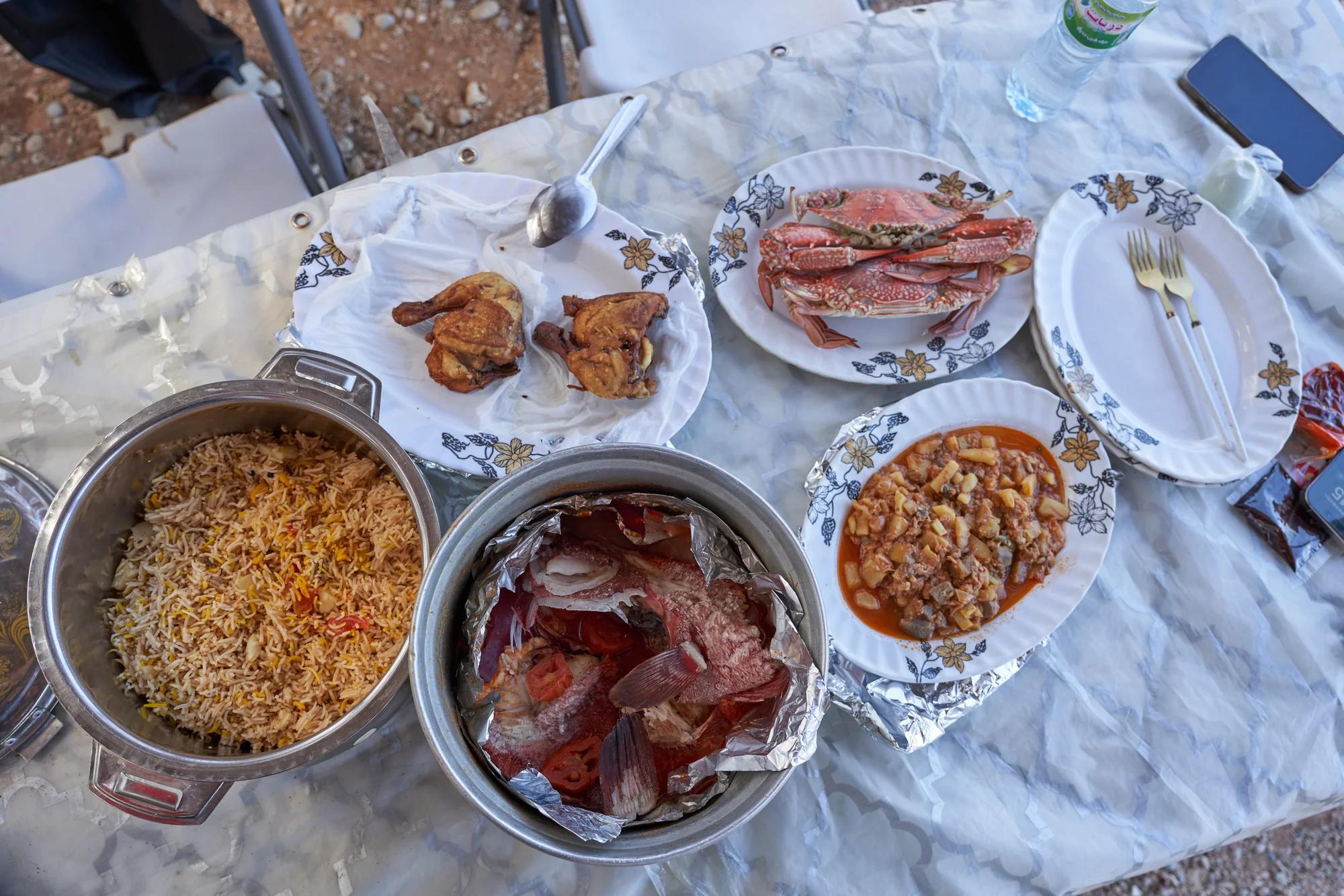
Shared food and tea offer a gentle introduction to hospitality. Meals depend on what is available and on the hosts' own rhythm. Accept what is offered graciously, ask before photographing a person or home, and make room for an unscheduled conversation.
HERITAGE IN PLACES AND HANDS
A cave such as Hoq holds traces of earlier journeys, while language, stories and practical knowledge continue in daily life. Treat archaeological places with care: do not touch or remove anything. When buying crafts or services, choose local makers where possible and agree on a fair price.
TRAVEL AS A GUEST
Follow local advice on dress, photographs and access to villages or homes. Respect a refusal without pressing for an explanation. Let introductions happen through people who know the community, and allow each encounter to remain natural.
Further reading: UNESCO: Safeguarding the Soqotri language · UNESCO World Heritage: Socotra Archipelago