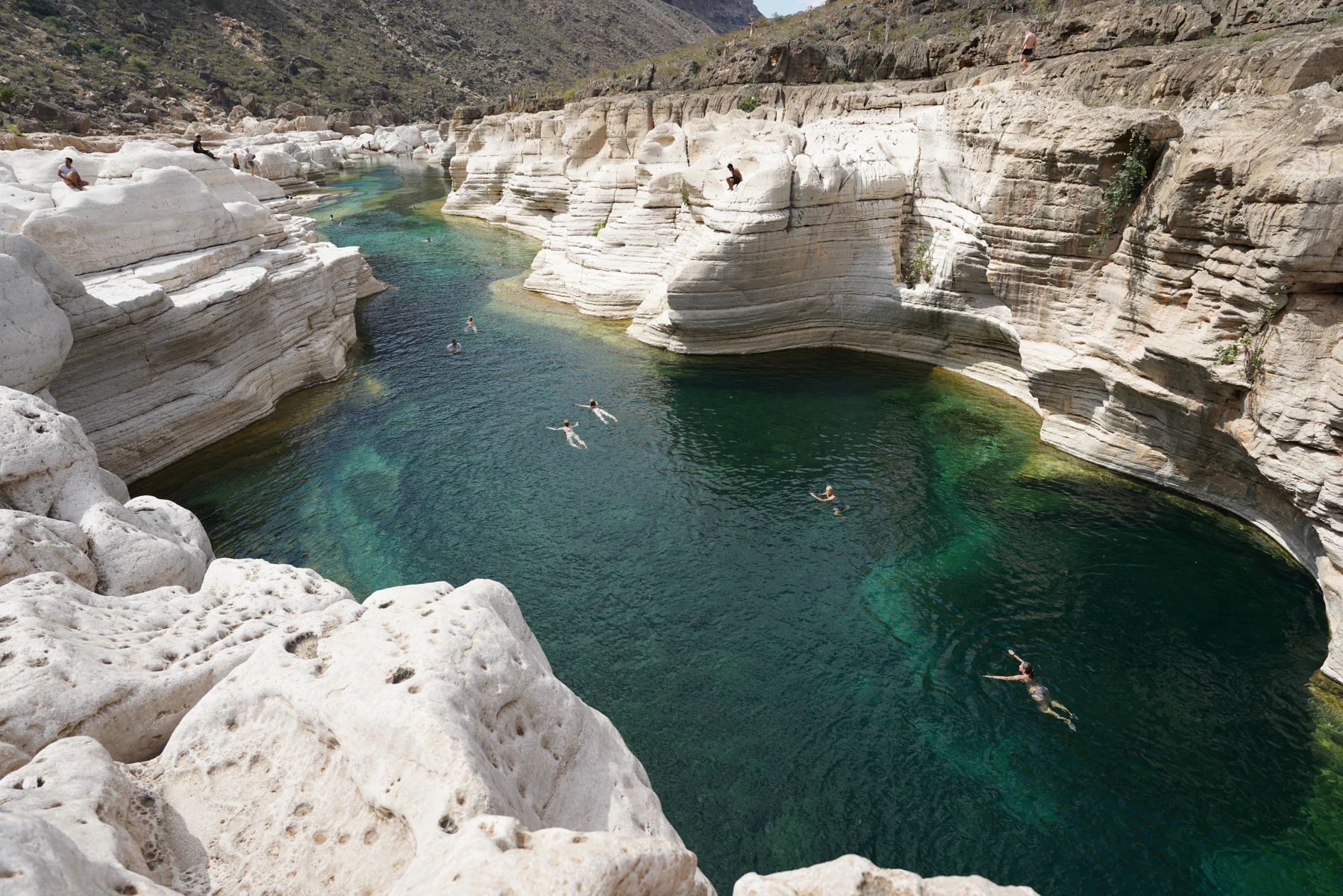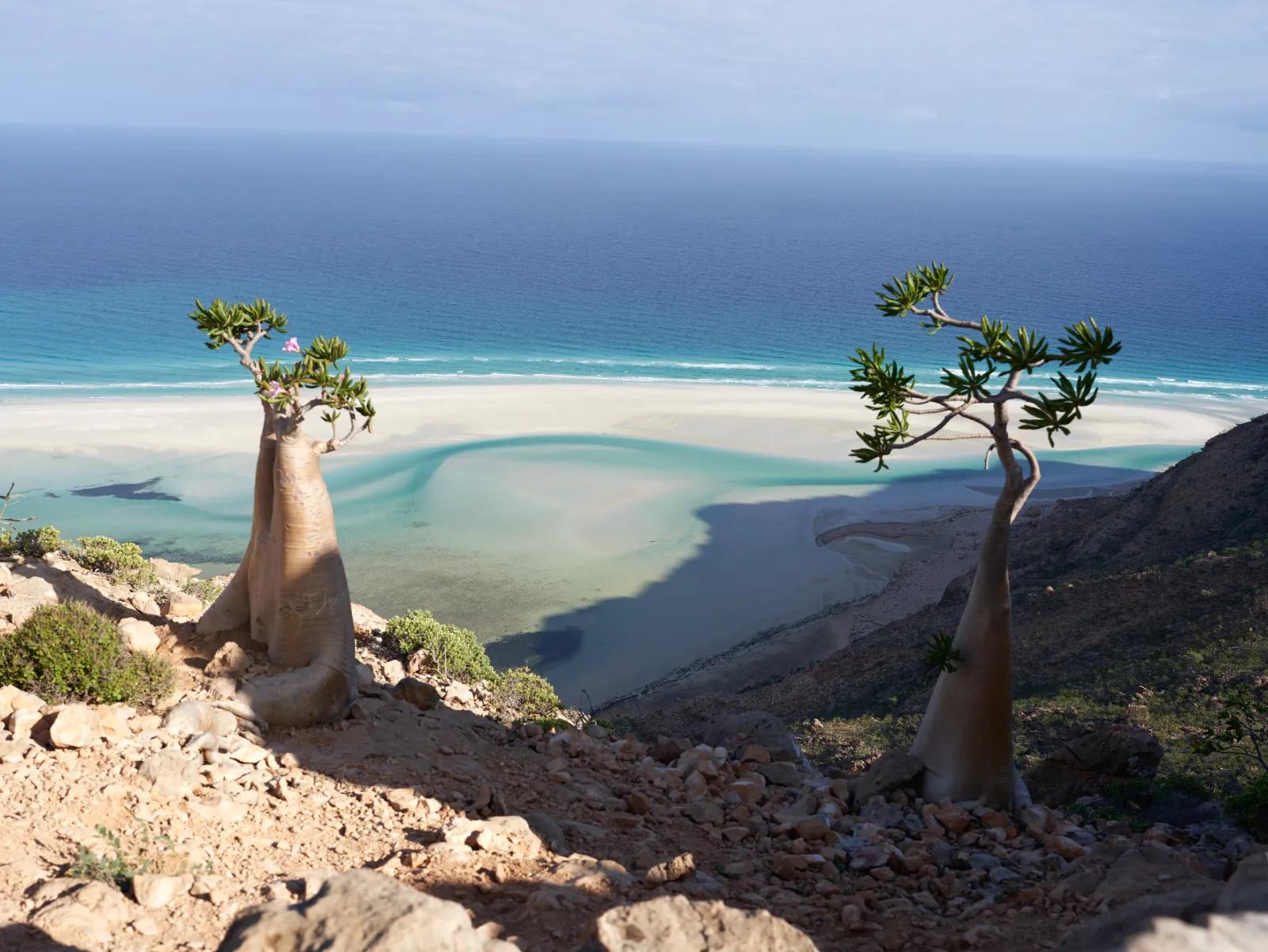
Look closely: Socotra's wildlife is as remarkable in small details as in famous silhouettes.
Long isolation has shaped a natural world found in few other places. The dragon blood tree is its best-known emblem, but Socotra's ecological story also lives in birdsong, small reptiles, land snails and the sea around the archipelago.
WHAT ENDEMIC REALLY MEANS
UNESCO records 825 plant species on the archipelago, 307 of them endemic. It also reports that around 90% of its reptile species and 95% of its land snail species occur nowhere else. Endemic means restricted to a place; it does not by itself mean endangered. Each species has its own conservation story.
PLANTS THAT SHAPE THE VIEW
Dragon blood trees, desert roses and frankincense trees occupy different habitats and reveal different ways to live in a dry landscape. Look for the shape of a trunk, the shade beneath a crown and the young plants nearby. Leave resin, seeds and branches undisturbed.
BIRDS, SMALL CREATURES AND PATIENCE
In the highlands and along the coast, listening often works better than chasing a checklist. The Socotra sunbird is one of the archipelago's endemic birds; the Egyptian vulture is a visitor's more imposing encounter. Neither sighting is guaranteed. Let birds choose the distance, especially near feeding or nesting sites.
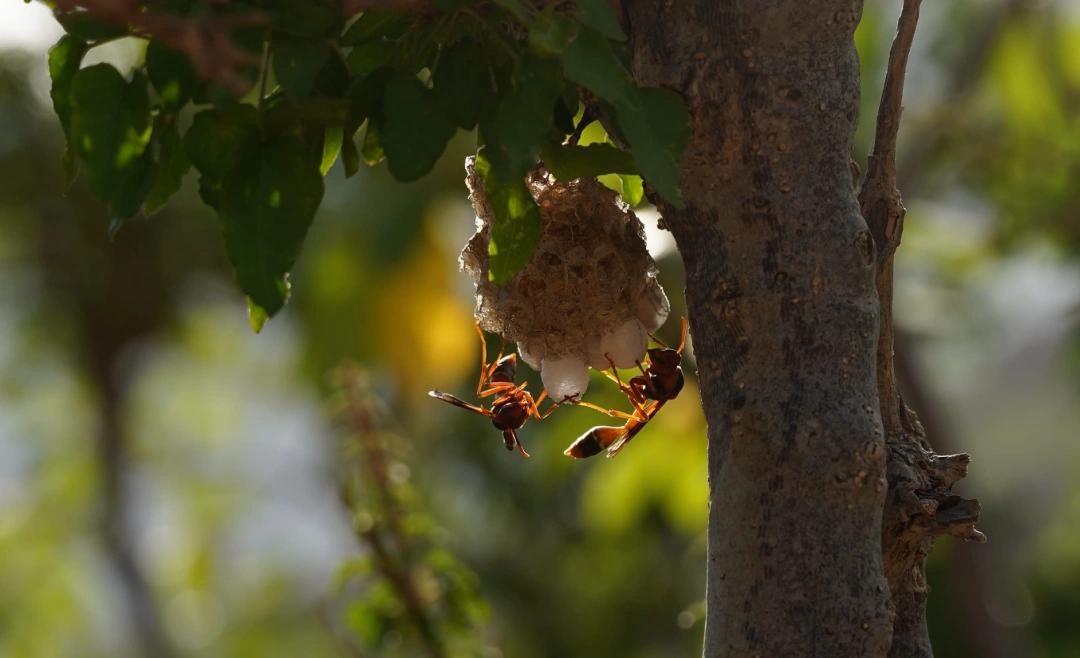
Even a nest beneath leaves deserves space. Watch insects without touching nests or moving branches to improve a photograph.
LIFE CONTINUES UNDERWATER
The archipelago's ecological richness extends beyond land. UNESCO lists 253 reef-building coral species and 730 coastal fish species. Sea conditions and local advice decide whether swimming or snorkelling is appropriate; in the water, never stand on coral or chase marine animals.
LEAVE THE ENCOUNTER UNCHANGED
Stay on established paths, carry out litter, do not feed wildlife and do not collect shells or plants. Keep a respectful distance from animals and sensitive habitats. A photograph is strongest when the scene remains intact after you leave.
Further reading: UNESCO World Heritage: Socotra Archipelago